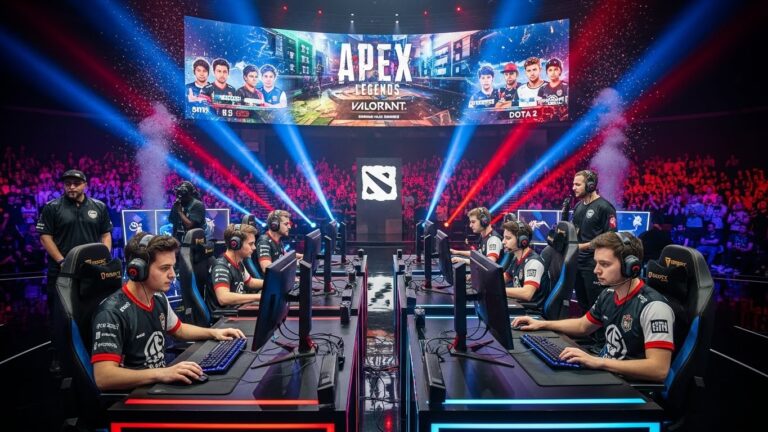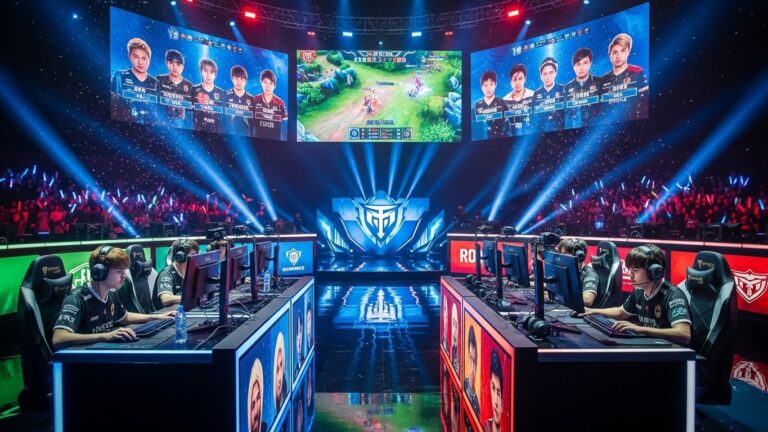

Esports has transformed from a niche hobby to a multi-billion-dollar industry, with global recognition, professional athletes, and fans from all corners of the world. This article delves into the evolution of esports, its cultural impact, the growth of major gaming titles, and the future of competitive gaming.
The Birth of Esports: The Early Days
Esports, short for electronic sports, traces its origins to the 1970s and 1980s, but its modern form began to take shape in the late 1990s and early 2000s. It was a time when gaming consoles and personal computers became more powerful, and multiplayer games allowed players to compete against each other in real-time, creating the foundation for competitive gaming.
The earliest examples of competitive gaming can be traced to arcade tournaments in the 1970s. Titles like Pong and Space Invaders attracted players looking to prove their skills. However, it wasn’t until the release of games such as Quake (1996) and Starcraft (1998) that the idea of professional competitive gaming started to gain momentum. These games introduced online multiplayer modes that allowed players to compete across the globe. The rise of LAN (Local Area Network) parties and internet cafes provided an ideal setting for these competitions.
The true beginning of esports as we know it came in 1997 when the Red Annihilation tournament for Quake took place. This tournament is often considered one of the first major esports events. It featured professional players competing for a high-profile prize—a Ferrari, symbolizing the potential of high-stakes competitions. This event helped put competitive gaming on the map, and it marked the starting point for organized esports events.
The Growth of Esports in the 2000s
The early 2000s marked a pivotal moment in the development of esports. The release of Warcraft III in 2002 and Starcraft: Brood War in 1998 served as cornerstones of competitive gaming. These titles attracted a dedicated fanbase, with competitive play becoming a regular fixture in many parts of the world. The rise of tournaments like the World Cyber Games (WCG) and Electronic Sports World Cup (ESWC) played a critical role in expanding the reach of esports.
In South Korea, Starcraft: Brood War took on a life of its own, becoming a cultural phenomenon. Korean television networks started broadcasting matches, and the game was played professionally in front of live audiences. This marked the first time esports were treated as a mainstream form of entertainment. The success of South Korea’s esports scene inspired other countries to begin nurturing competitive gaming communities.
In North America and Europe, esports continued to grow with the rise of games like Counter-Strike and Warcraft III. Tournaments were organized at local and international levels, and major sponsors began taking notice. This growth was further fueled by the increasing popularity of broadband internet, which allowed players to participate in online tournaments and streams, making it easier for fans to engage with the esports community.
The Rise of Major Gaming Titles
As esports continued to grow throughout the 2000s, certain titles became synonymous with competitive gaming. These games not only attracted professional players but also built dedicated fanbases that followed the competitions religiously.
Counter-Strike: The Competitive Shooter
Counter-Strike (released in 1999) is one of the most influential games in the history of esports. Initially created as a mod for Half-Life, the game quickly became a standalone title that gained a massive following. Its emphasis on team-based strategy, precise aiming, and quick reflexes made it a popular choice for competitive players. The game saw its first major international tournament in 2000 with the Cyberathlete Professional League (CPL) Championship.
Over the years, Counter-Strike evolved, with Counter-Strike: Source (2004) and Counter-Strike: Global Offensive (2012) continuing the game’s legacy. With its thrilling action and skill-based gameplay, CS:GO remains one of the top esports titles today.
League of Legends: A New Era of Strategy
Released in 2009, League of Legends (LoL) quickly became one of the most popular multiplayer online battle arena (MOBA) games in the world. It introduced a new level of strategy and teamwork to esports, with five-player teams battling it out on a map. The game was designed with competitive play in mind, offering a balanced and ever-evolving experience that kept players and spectators coming back for more.
Riot Games, the developer behind LoL, organized the first League of Legends World Championship in 2011. This marked the beginning of what would become one of the most lucrative and highly viewed esports events globally. The game’s success led to the creation of professional leagues in North America, Europe, Korea, and China, with teams competing for millions in prize money.
Dota 2: A Competitive Giant
Dota 2, developed by Valve, emerged as a serious contender in the esports world following its release in 2013. Based on the Defense of the Ancients mod for Warcraft III, Dota 2 took the MOBA genre to new heights with its deep gameplay mechanics, unique heroes, and massive multiplayer matches. What set Dota 2 apart was its free-to-play model and its integration with the Steam platform, allowing players to easily access the game and participate in online competitions.
The International, Dota 2‘s annual World Championship, quickly became one of the most prestigious tournaments in esports, with prize pools often exceeding $30 million. The game’s competitive scene attracted massive sponsorships and a global fanbase.
Esports Goes Mainstream
The 2010s marked the true mainstreaming of esports. What was once a niche hobby had now evolved into a multi-billion-dollar industry, drawing attention from traditional media outlets, corporations, and governments. The rise of platforms like Twitch and YouTube provided players and teams with the ability to broadcast their gameplay to millions of viewers around the world. This surge in viewership further solidified esports as a viable and entertaining form of competition.
The Role of Streaming Platforms
The introduction of live streaming platforms played a significant role in the global reach of esports. Twitch, launched in 2011, became the primary destination for esports content. With millions of daily viewers, Twitch provided a space for fans to watch live tournaments, interact with players, and even watch “let’s play” videos of popular games. The ability to watch top-tier players compete in real time created a new form of entertainment for fans around the world.
Streaming services also opened new revenue streams for content creators, from advertising to direct fan donations. The success of Twitch helped propel esports to new heights, with major leagues and tournaments adopting live streaming as their primary method of broadcasting.
Corporate Sponsorships and Investments
As esports became more popular, corporate sponsorships became an integral part of the ecosystem. Brands from outside the gaming world, including Coca-Cola, Red Bull, and Intel, began investing in esports teams, tournaments, and events. This influx of capital helped raise the level of competition and allowed for larger prize pools, better production values, and more extensive marketing campaigns.
Professional esports organizations, such as Cloud9, Team Liquid, and Fnatic, secured sponsorship deals with global brands, adding to the prestige and legitimacy of the industry. The backing of multinational corporations helped further solidify esports as a mainstream entertainment sector.
Esports in Traditional Sports Arenas
Esports continued to break barriers by collaborating with traditional sports organizations. In 2018, the Overwatch League (OWL), developed by Blizzard Entertainment, became the first major esports league to adopt a city-based franchise model similar to that of the NBA or NFL. Teams such as the New York Excelsior and Los Angeles Gladiators were formed, with players and coaches recruited for their performance rather than their geographic location.
In addition to the OWL, other traditional sports leagues, including the NFL and NBA, began investing in esports teams or organizing esports events. This trend has further solidified the connection between traditional sports and esports.
The Future of Esports
The future of esports appears bright, with continued investment, innovation, and global expansion on the horizon. Several factors suggest that esports will continue to grow, including:
Technological Advancements
The rapid advancement of gaming technology will continue to shape the esports industry. Virtual reality (VR) and augmented reality (AR) are already making their way into esports, offering players new ways to compete and train. The rise of 5G networks will also provide faster internet speeds, allowing for smoother online gaming experiences and more seamless live streaming of esports events.
The Expansion of Mobile Esports
Mobile gaming has become an increasingly important part of the esports landscape. Games like PUBG Mobile and Mobile Legends have seen explosive growth, particularly in Asia. The accessibility of mobile gaming allows people from different socioeconomic backgrounds to participate in esports, contributing to the growth of the industry in emerging markets. As mobile devices become more powerful, mobile esports will likely continue to rise in prominence.
Esports in Education
Esports programs in schools and universities are becoming increasingly common. Many institutions now offer scholarships for competitive gamers, and esports teams are being established as part of school sports programs. This movement is helping to legitimize esports as a legitimate career path for young athletes and providing opportunities for students to pursue their passion for gaming while obtaining an education.
Conclusion
Esports has evolved into a cultural and economic powerhouse, with a diverse and global fanbase, professional players, and multimillion-dollar tournaments. From humble beginnings in arcade rooms and internet cafes, esports has become a legitimate industry that continues to grow at an unprecedented rate. As technology advances and new games emerge, the future of esports holds even more exciting possibilities. With its global appeal and ever-expanding reach, esports is poised to remain a key player in the entertainment landscape for years to come.
About the Author