
Introduction
In a world divided by borders, languages, and cultures, few things manage to bring people together as powerfully as esports. What started as a niche hobby has evolved into a global phenomenon that connects millions of players and fans across every continent. Esports is more than just competition—it’s a shared experience that transcends differences, promoting global unity through passion, teamwork, and technology.
Unlike traditional sports, esports doesn’t depend on physical proximity or infrastructure. All it takes is an internet connection and a shared love for gaming. Players from vastly different regions can team up, compete, and communicate in real time. This accessibility has transformed esports into a cultural bridge, uniting people through digital competition and mutual respect.
In this blog, we’ll explore the best ways esports builds global unity—examining its role in breaking down barriers, creating international communities, fostering cultural exchange, and inspiring a sense of belonging that crosses all borders.
1. Breaking Down Cultural and Language Barriers
One of the most beautiful aspects of esports is how it dissolves traditional boundaries. Gamers from different countries often come together to compete, collaborate, and share experiences. Despite language differences, the universal language of gaming helps bridge communication gaps.
In competitive titles like League of Legends, Dota 2, or Counter-Strike, teams are often made up of players from various countries. They may not share the same native tongue, but their understanding of the game’s mechanics, strategies, and emotions creates instant harmony.
Gaming terminology—commands like “push,” “rotate,” or “rush”—has become part of a global vocabulary that transcends spoken language. Players learn to coordinate intuitively, relying on teamwork and shared understanding rather than words.
In this sense, esports acts as a digital Esperanto—an international language that allows people to connect through play. It fosters appreciation for diversity while demonstrating that cooperation is possible even when communication styles differ.
2. Creating a Global Community
Esports isn’t limited to players—it thrives on its massive audience. Millions of fans around the world tune in to tournaments, watch live streams, and engage in online discussions. Whether it’s a local competition or a major world championship, fans unite in their excitement and shared support for their favorite teams.
Platforms like Twitch, YouTube, and regional streaming services allow fans from every corner of the globe to interact in real time. They discuss plays, celebrate victories, and even comfort one another after defeats. These virtual spaces create a sense of belonging that transcends national identity.
Unlike traditional sports, where fans might primarily follow teams from their own country, esports fans often support international teams. A fan in Brazil might root for a Korean League of Legends team, while a viewer in Canada might idolize a player from China. This cross-border admiration builds global empathy and understanding.
Through online communities, esports transforms spectatorship into connection, showing that passion for gaming can unite even the most distant cultures.
3. Promoting International Collaboration in Teams
Professional esports teams are among the most visible examples of global unity in action. Many teams feature players from multiple nations working together under one banner. This international collaboration demonstrates how diversity enhances performance and creativity.
For example, a team may have players from Europe, Asia, and North America, each bringing their own regional strategies and playstyles. When combined, these unique perspectives create innovative tactics that push the boundaries of the game itself.
Coaches, analysts, and managers also come from diverse backgrounds, turning esports organizations into melting pots of global talent. Communication and cultural understanding become essential skills, as players learn to adapt to different work ethics, languages, and customs.
This global teamwork extends beyond gameplay—it’s a model of international cooperation, showing how diversity can drive success when united by a common goal.
4. Global Tournaments and Shared Experiences
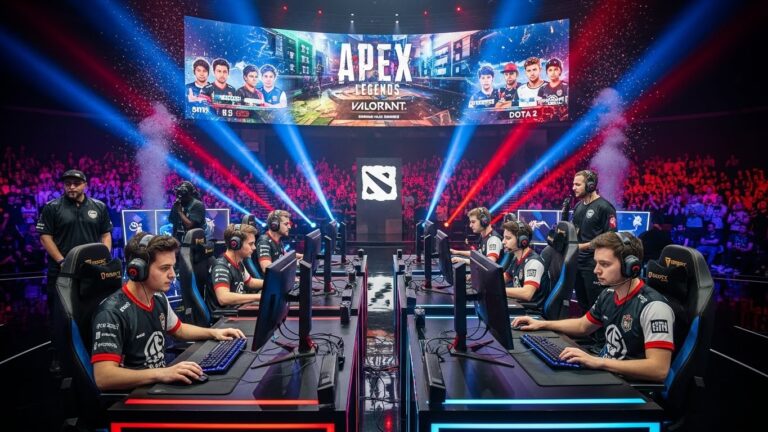
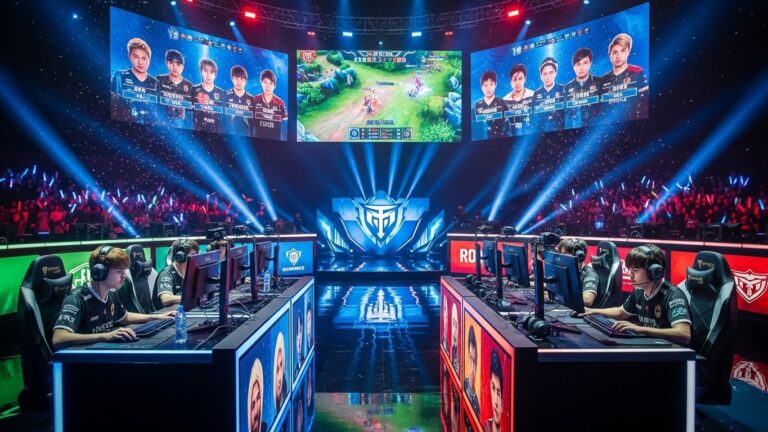
One of the most powerful ways esports builds unity is through international tournaments. Events like The International for Dota 2, the League of Legends World Championship, and the Counter-Strike Majors gather players, fans, and media from every continent.
These tournaments function like digital Olympic Games—celebrations of skill, passion, and mutual respect. Fans from across the world watch together, share reactions online, and participate in the same emotional journey regardless of where they are.
When a team wins, the victory is not just theirs—it’s shared by fans globally who feel connected to the story. Likewise, when an underdog from a lesser-known region performs well, it inspires pride and motivation for players worldwide.
These shared emotional experiences are at the heart of unity. Esports tournaments don’t just crown champions; they create moments that millions of people experience together, reinforcing a sense of global connection.
5. Encouraging Cultural Exchange Through Gaming
Esports is also a form of cultural exchange. Each region brings its unique identity, playstyle, and fan culture to the global stage. Watching teams from different regions compete allows fans to appreciate these cultural nuances and learn from them.
For instance, South Korean esports teams are known for discipline and precision, European teams for creative strategies, and Southeast Asian teams for aggressive, fast-paced tactics. Fans learn about different approaches to teamwork, communication, and competition.
Outside of gameplay, esports events celebrate diversity through opening ceremonies, music performances, and design elements inspired by various cultures. Fans attending these events are exposed to new traditions, languages, and artistic expressions.
In this way, esports fosters cultural curiosity rather than division. It becomes a digital arena where cultures meet, learn, and grow together.
6. Reducing Geographical Inequality Through Accessibility
Traditional sports often require physical venues, expensive equipment, and local infrastructure. Esports, on the other hand, only requires a computer, console, or smartphone—and an internet connection. This accessibility opens doors for people who might otherwise never have the chance to compete on a global stage.
Players from developing nations can rise to international fame purely through skill and dedication. This democratization of opportunity builds unity by proving that talent knows no boundaries.
Moreover, online tournaments and training platforms allow players from remote areas to practice and compete without the need for travel. As internet access continues to expand globally, more communities are joining the esports ecosystem, strengthening global participation.
By leveling the playing field and offering equal opportunities for everyone, esports promotes fairness and inclusivity, key pillars of unity.
7. Inspiring Global Friendships and Partnerships
For millions of players, esports is more than competition—it’s a way to make friends around the world. Online multiplayer games serve as social platforms where players communicate, strategize, and share experiences daily.
Many lasting friendships have formed through gaming. Players who once met as strangers in ranked matches or online communities often go on to become teammates, collaborators, or even lifelong friends. These relationships help humanize global connections, transforming distant nations into familiar names and faces.
Professional organizations and sponsors also build partnerships across borders. Companies from different regions collaborate to organize events, create merchandise, and produce global broadcasts. These partnerships strengthen economic and cultural ties while spreading a shared sense of community.
Through friendships and collaboration, esports proves that technology can unite humanity rather than divide it.
8. Uniting Generations Through Shared Passion
Esports doesn’t just connect nations—it also bridges generational gaps. In many parts of the world, gaming is no longer seen as just a youth activity. Parents, educators, and older adults are becoming part of the esports conversation, supporting teams or even competing themselves.
Generational unity develops when families share gaming as a common interest. Parents who once struggled to understand video games now find themselves watching tournaments with their children or playing together online.
Moreover, the growing professionalism of esports—complete with coaches, managers, and analysts—mirrors traditional sports structures. This makes it easier for older generations to appreciate and respect competitive gaming, viewing it as a legitimate and unifying discipline.
By connecting people of all ages through entertainment and teamwork, esports helps bridge societal divides, creating a more inclusive sense of community.
9. Promoting Tolerance and Respect
Esports promotes unity not only through shared enjoyment but also through the values it teaches. In high-stakes competition, players learn to respect opponents, value teamwork, and handle both victory and defeat with humility.
Global tournaments showcase these values on a massive scale. When players shake hands after a match, regardless of nationality, it sends a message of sportsmanship that resonates with millions watching around the world.
Many organizations now focus on diversity and inclusion in esports, advocating for equal opportunities for all genders, ethnicities, and backgrounds. These initiatives reinforce respect and empathy, helping combat stereotypes and prejudice.
By normalizing respect and inclusion, esports shapes a generation that values unity over division—a powerful message for the digital age.
10. Encouraging Global Education and Career Opportunities
Esports has also become an educational bridge that connects people through learning. Universities and institutions worldwide now offer esports management, design, and broadcasting programs, often collaborating across continents.
Students from different countries share knowledge, ideas, and experiences, developing a global understanding of the gaming industry. This academic collaboration builds professional networks that transcend borders.
Additionally, careers in esports—from content creation to event production—require international cooperation. Teams rely on staff from various countries, using digital communication to coordinate tournaments, analyze data, and produce global content.
These collaborations teach valuable lessons in global teamwork and cultural understanding, reinforcing unity through shared purpose.
11. The Role of Streaming and Social Media in Global Connection
Streaming platforms and social media play a massive role in connecting the global esports audience. Streamers and content creators interact with fans from all over the world, using humor, skill, and storytelling to unite diverse communities.
Through live chats, fan art, and social discussions, people from different regions bond over shared enthusiasm. Cultural barriers fade as players and viewers learn from one another’s perspectives.
Social media amplifies these connections by spreading highlights, memes, and commentary across languages and time zones. A spectacular play from one tournament can instantly trend worldwide, turning local moments into global celebrations.
Streaming culture transforms individual entertainment into collective experience—another pillar of global unity built by esports.
12. Inspiring Peace Through Healthy Competition
At its core, esports embodies peaceful global competition. Nations that may be divided politically or geographically still come together in tournaments where skill and respect define success.
Players compete fiercely, but within the rules of fair play. Fans cheer passionately, but with admiration for opponents’ abilities. These dynamics demonstrate that conflict can exist without hostility, that rivalry can coexist with respect.
Esports teaches the world that unity doesn’t mean the absence of competition—it means channeling competition into creativity, teamwork, and mutual admiration. It shows that global harmony is achievable when people share values of integrity and respect, even in the heat of battle.
13. Charity and Global Causes in Esports
Esports communities frequently unite for good causes. Charity tournaments, live-stream fundraisers, and awareness campaigns gather players and fans to support global humanitarian efforts.
Events like these demonstrate that the same passion driving competition can also drive compassion. Whether raising funds for disaster relief, healthcare, or education, the gaming world consistently proves its ability to mobilize for a common good.
These shared acts of kindness strengthen global unity by reminding everyone that beneath the competition lies a collective desire to make the world better.
14. Esports and the Future of Global Connection
As technology continues to evolve, esports will play an even greater role in connecting humanity. Advances in virtual reality, artificial intelligence, and cloud gaming will eliminate remaining geographical barriers, allowing even deeper interaction between players worldwide.
Future tournaments might include real-time translation tools, holographic spectators, or global training platforms where players learn side by side regardless of location. The metaverse concept will likely integrate esports more directly into daily life, creating shared digital spaces for competition and collaboration.
In the decades ahead, esports could become a model for how global society operates—interconnected, inclusive, and focused on shared experience rather than separation.
Conclusion
Esports is more than a booming industry or an exciting form of entertainment—it’s a powerful global movement uniting people in ways few other mediums can. It breaks cultural barriers, fosters friendships, promotes respect, and creates shared experiences that span continents.
Through its inclusive nature, international tournaments, and global communities, esports has become a symbol of what humanity can achieve through technology and passion. It demonstrates that even in a competitive setting, unity is not only possible but inevitable when people connect through common goals.
Every time players log in from different countries, communicate through strategy instead of language, and compete with mutual respect, they build bridges of understanding that extend far beyond the digital arena.
In the end, esports reminds us that while we may live in different parts of the world, we share the same drive for connection, creativity, and achievement. It’s not just about who wins—it’s about how every match, every moment, and every shared cheer brings the world a little closer together.
About the Author