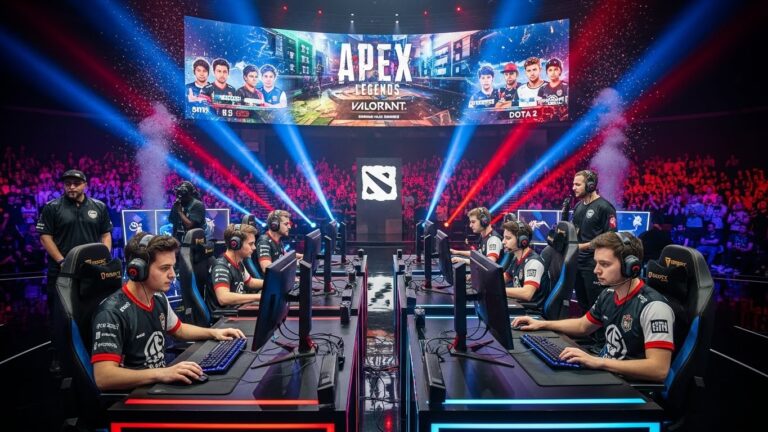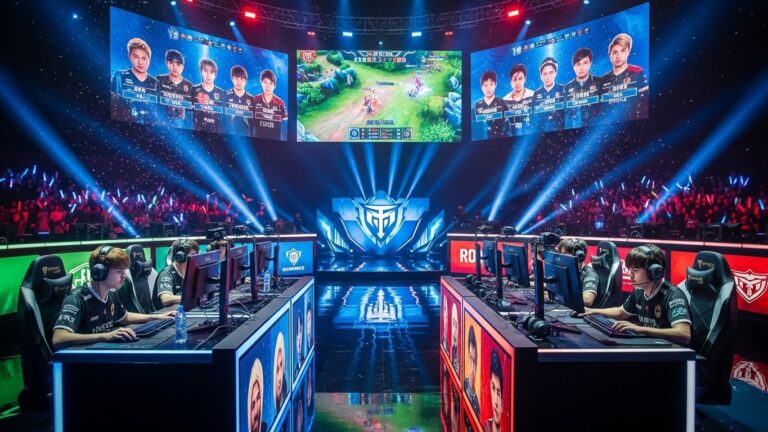
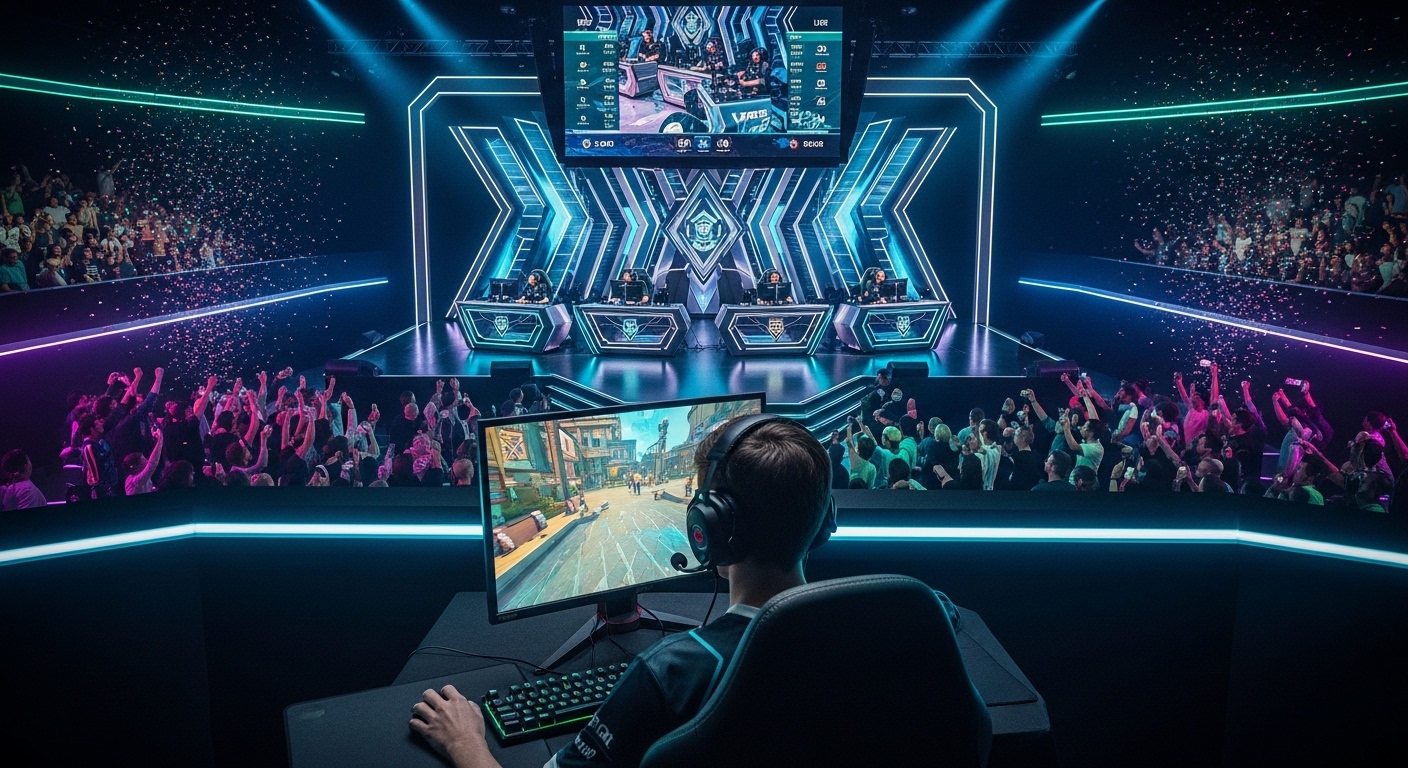
Esports, short for “electronic sports,” has transformed from a niche pastime into one of the most influential entertainment industries in the world. What was once considered a hobby for teenagers has evolved into a professional field with million-dollar tournaments, international recognition, and an audience that rivals traditional sports. From small LAN parties in basements to packed arenas and massive online streaming audiences, Esports has redefined what competition looks like in the digital age.
This blog explores the fascinating journey of Esports — its history, growth, culture, players, technology, and its future as a mainstream form of competition and entertainment.
The Origins of Esports: From Pixels to Prestige
The roots of Esports go back further than most people realize. In the early 1970s, gaming competitions began to emerge at universities and arcades. One of the first recorded gaming tournaments took place in 1972 at Stanford University, where students competed in the game “Spacewar.” The prize wasn’t millions of dollars, but a subscription to Rolling Stone magazine. Still, it marked the birth of organized video game competition.
The 1980s saw the rise of arcade gaming, with titles like Pac-Man, Donkey Kong, and Space Invaders dominating public gaming spaces. These games led to the first large-scale gaming contests, including the famous Space Invaders Championship held by Atari in 1980, which attracted over 10,000 participants across the United States. It was a landmark moment, proving that gaming could draw crowds and spark competition on a national scale.
During the 1990s, gaming shifted from arcades to home consoles and personal computers. Games like Street Fighter II and Mortal Kombat turned competitive play into a form of spectacle, while early first-person shooters like Quake and Counter-Strike laid the groundwork for team-based Esports that would later dominate the industry. The internet’s rise in the late 1990s allowed players from different countries to compete in real time, sparking the first truly international tournaments.
The Early 2000s: Foundations of the Modern Esports Era
The early 2000s marked the beginning of Esports as a structured, professional industry. Broadband internet and affordable gaming PCs made online competition more accessible, while organizations began to form around specific games. South Korea became the global hub of Esports, with the government recognizing professional gaming as an official career. Televised matches of StarCraft: Brood War attracted millions of viewers, turning players into celebrities.
In the West, competitive gaming grew steadily with the formation of leagues such as Major League Gaming (MLG) in 2002. Games like Halo 2, Counter-Strike 1.6, and Warcraft III gained loyal followings and began to attract sponsorships, prize pools, and fan communities. The seeds of modern Esports were firmly planted — all that was needed was global connectivity and streaming platforms to ignite an explosion of popularity.
The 2010s: The Decade Esports Took Over the World
If the 2000s built the foundation, the 2010s were the decade that Esports conquered the world. This period saw the rise of professional leagues, major tournaments, and gaming as a mainstream spectator sport. Streaming platforms like Twitch and YouTube Gaming revolutionized how fans consumed Esports content. No longer did fans have to rely on highlight clips or local broadcasts; they could watch live matches, chat with other fans, and even support their favorite players directly.
Games like League of Legends, Dota 2, Counter-Strike: Global Offensive, Overwatch, and Fortnite became household names. Riot Games, Valve, and Blizzard Entertainment developed global leagues and annual world championships with prize pools exceeding tens of millions of dollars. The Dota 2 International 2019 offered a staggering prize pool of over $34 million, with the winning team taking home more than most traditional athletes earn in a year.
Esports events began filling stadiums that once hosted only traditional sports. The League of Legends World Championship took place in arenas like the Staples Center in Los Angeles and the Bird’s Nest Stadium in Beijing. The crowds, chants, and fan energy mirrored that of soccer or basketball matches. Esports was no longer a niche hobby — it was a full-fledged industry.
The Culture of Esports: A New Kind of Fandom
One of the most fascinating aspects of Esports is its unique fan culture. Unlike traditional sports, where fans are often bound by geography, Esports fans form communities across continents through online forums, streaming chats, and social media. A fan in Brazil can support a team from South Korea, while another in Canada might follow a player from Sweden.
The community-driven nature of Esports has given rise to a deeply engaged audience. Fans not only watch matches but also create content, analyze strategies, and even build their own tournaments. Memes, inside jokes, and digital fan art are as much a part of Esports culture as the games themselves. Professional players often stream their practice sessions, giving fans unprecedented access to their personalities and routines. This level of transparency has built strong personal connections between players and their audiences.
Moreover, Esports transcends age barriers. While many fans are young, older gamers who grew up with titles like StarCraft and Quake remain active participants in the scene. Esports has proven that gaming is not just entertainment for kids but a universal passion that spans generations.
The Business of Esports: Big Money, Bigger Dreams
The financial growth of Esports has been nothing short of extraordinary. What began as small community tournaments has evolved into an industry worth billions of dollars. Revenue comes from sponsorships, advertising, ticket sales, broadcasting rights, and merchandise. Major brands — from tech giants to fast-food chains — have entered the Esports space, seeking to reach the coveted young, tech-savvy audience that traditional advertising often misses.
Teams like FaZe Clan, Team Liquid, Cloud9, and G2 Esports have become global brands in their own right. They operate much like traditional sports franchises, with training facilities, coaches, analysts, and performance psychologists. Some even have celebrity investors and collaborations with fashion brands.
The players themselves have benefited tremendously from this growth. Top Esports athletes can earn millions annually through tournament winnings, sponsorships, and streaming revenue. They undergo rigorous training schedules, analyze gameplay footage, and maintain physical and mental health regimens similar to professional athletes in traditional sports. The narrative of the “gamer in the basement” has long been replaced by the image of disciplined professionals competing on the global stage.
The Role of Technology in Esports Evolution
Technology has been the lifeblood of Esports since its inception. Every advancement in computing, graphics, and connectivity has pushed the industry forward. High-speed internet made online competitions feasible. Streaming platforms made it possible for millions to watch simultaneously. Game engines like Unreal and Unity allowed developers to create balanced, competitive environments that reward skill and strategy.
Virtual reality and augmented reality are now opening new possibilities for immersive Esports experiences. Meanwhile, artificial intelligence is being used to enhance coaching, analyze player performance, and improve matchmaking systems. Data analytics helps teams develop strategies, while cloud computing ensures smooth, lag-free experiences for global audiences.
Esports also drives technological innovation. The demand for high-performance hardware — from gaming monitors to graphics cards — has spurred companies to constantly push boundaries. In a way, Esports and technology exist in a symbiotic relationship, each fueling the other’s growth.
The Global Reach of Esports
One of Esports’ most defining features is its truly global nature. Unlike most traditional sports, which are often regional, Esports transcends borders. Asia remains a dominant force, particularly South Korea, China, and Japan, where gaming culture is deeply ingrained. South Korea, in particular, is often credited with professionalizing gaming, establishing player unions, and even introducing Esports into school curriculums.
In North America and Europe, Esports has become a mainstream form of entertainment. Universities offer Esports scholarships, and cities host Esports arenas. In the Middle East and Latin America, the industry is rapidly growing, driven by young populations and expanding internet access. Even in regions where gaming once struggled due to limited infrastructure, mobile Esports has bridged the gap, allowing millions to compete using their smartphones.
This global reach has made Esports a symbol of digital unity. Players from vastly different backgrounds come together, speaking the universal language of gaming. It’s one of the few arenas where nationality, language, and geography take a back seat to pure skill.
Challenges in the Esports Industry
Despite its meteoric rise, Esports faces significant challenges. One major issue is player burnout. The intense competition and long practice hours can take a toll on mental and physical health. Unlike traditional athletes who often compete well into their 30s, Esports players tend to peak in their early 20s, with many retiring young due to stress and exhaustion.
Another challenge lies in the lack of standardization. Different games have their own leagues, rules, and governing bodies, making it difficult to establish a unified structure like that of traditional sports organizations. This fragmentation can create instability for players and teams who rely on consistent tournament schedules and sponsorship deals.
Toxicity and online harassment also remain persistent problems within some gaming communities. Developers, organizations, and streaming platforms continue to work on building safer, more inclusive environments, but progress is ongoing.
Lastly, the volatility of game popularity poses a risk. Unlike football or basketball, which have remained consistent for over a century, Esports titles can fade out quickly. Developers must continually update and balance their games to keep audiences engaged.
Education and Career Opportunities in Esports
The rise of Esports has created a diverse range of career opportunities beyond playing professionally. As the industry expands, it requires experts in marketing, event management, broadcasting, game design, and psychology. Universities and colleges around the world have introduced Esports-related courses, covering topics such as game theory, digital media, and business management.
Esports education also helps students develop valuable skills such as teamwork, leadership, critical thinking, and communication. Competitive gaming, when managed properly, teaches discipline and strategic planning — qualities that extend beyond gaming and into real-world applications.
Even high schools have embraced Esports as part of their extracurricular offerings. Students compete in scholastic leagues, representing their schools and earning scholarships for college programs. This integration into education highlights how far Esports has come in terms of legitimacy and recognition.
The Intersection of Esports and Traditional Sports
As Esports continues to grow, its relationship with traditional sports becomes increasingly intertwined. Major sports organizations, including football and basketball teams, have invested in Esports franchises. Athletes from traditional sports often stream their favorite games or collaborate with Esports teams, bridging the gap between digital and physical competition.
The Olympic movement has also taken notice. While Esports has yet to be fully included in the Olympic Games, discussions are ongoing, and events such as the Olympic Esports Series have already been introduced. This convergence underscores a broader cultural shift — competition, regardless of its form, is being redefined for a digital age.
Traditional sports can also learn from Esports in terms of fan engagement. Esports thrives on digital interactivity, real-time chat, and direct access to players — aspects that traditional sports leagues are increasingly adopting to stay relevant in the age of streaming and social media.
The Future of Esports: Where Do We Go From Here?
The future of Esports looks incredibly bright. With advancements in technology, increased global accessibility, and growing institutional support, the industry shows no signs of slowing down. Emerging technologies such as artificial intelligence, blockchain, and virtual reality are poised to transform how Esports are played, watched, and monetized.
Mobile Esports will likely continue to drive growth in developing regions, while professional leagues will mature and adopt more standardized structures. As virtual and augmented reality technologies evolve, audiences may one day experience Esports in entirely new dimensions — watching matches from inside the game world or interacting with players in real time.
Esports will also play a crucial role in shaping the metaverse, where digital experiences merge with social interaction and entertainment. Players and fans could gather in virtual arenas, purchase digital merchandise, and attend immersive events without leaving their homes. The lines between gaming, sports, and entertainment will blur even further.
Ultimately, Esports represents more than just gaming. It embodies the spirit of innovation, creativity, and connection that defines the 21st century. Whether as a profession, a hobby, or a cultural movement, Esports is here to stay — and its story is only just beginning.
Conclusion: Esports as the New Frontier of Competition
Esports has evolved from humble beginnings into a global powerhouse that reshapes how we define competition and entertainment. It has created new heroes, built new communities, and proven that skill, strategy, and passion can thrive in the digital realm just as they do on physical fields.
What began as casual gaming among friends has become a multibillion-dollar ecosystem influencing technology, media, and culture. Esports represents the future of human competition — a fusion of intellect, reflex, and innovation. It stands as a testament to how far technology can take us when combined with human ambition.
As we look to the years ahead, one thing is certain: Esports is not a passing trend. It is a new era of sport, art, and community — a revolution that continues to unfold, pixel by pixel, match by match, and victory by victory.
About the Author