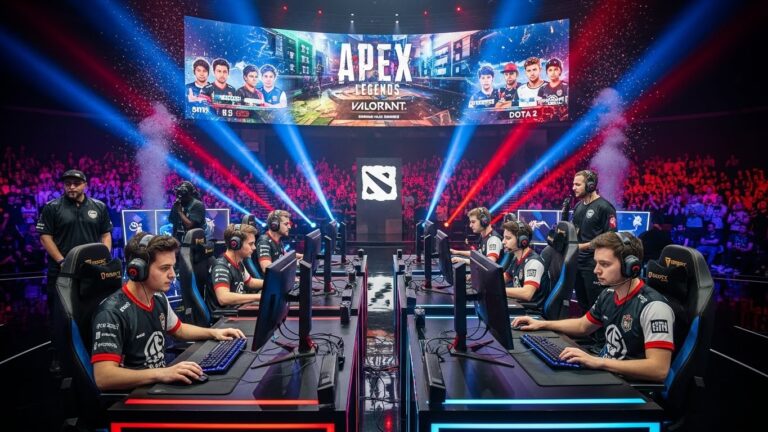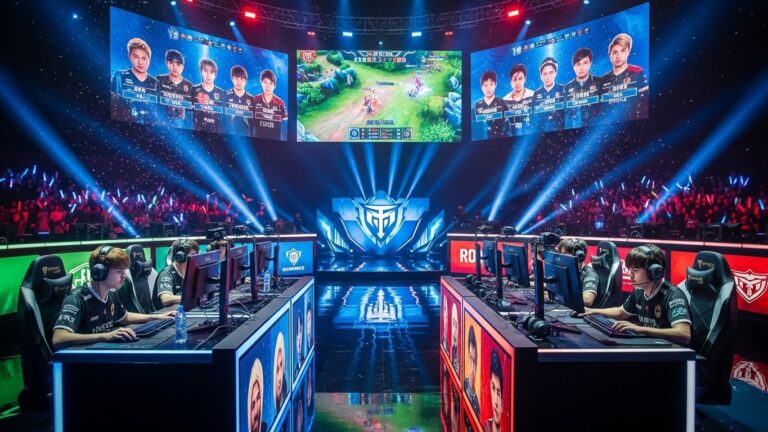
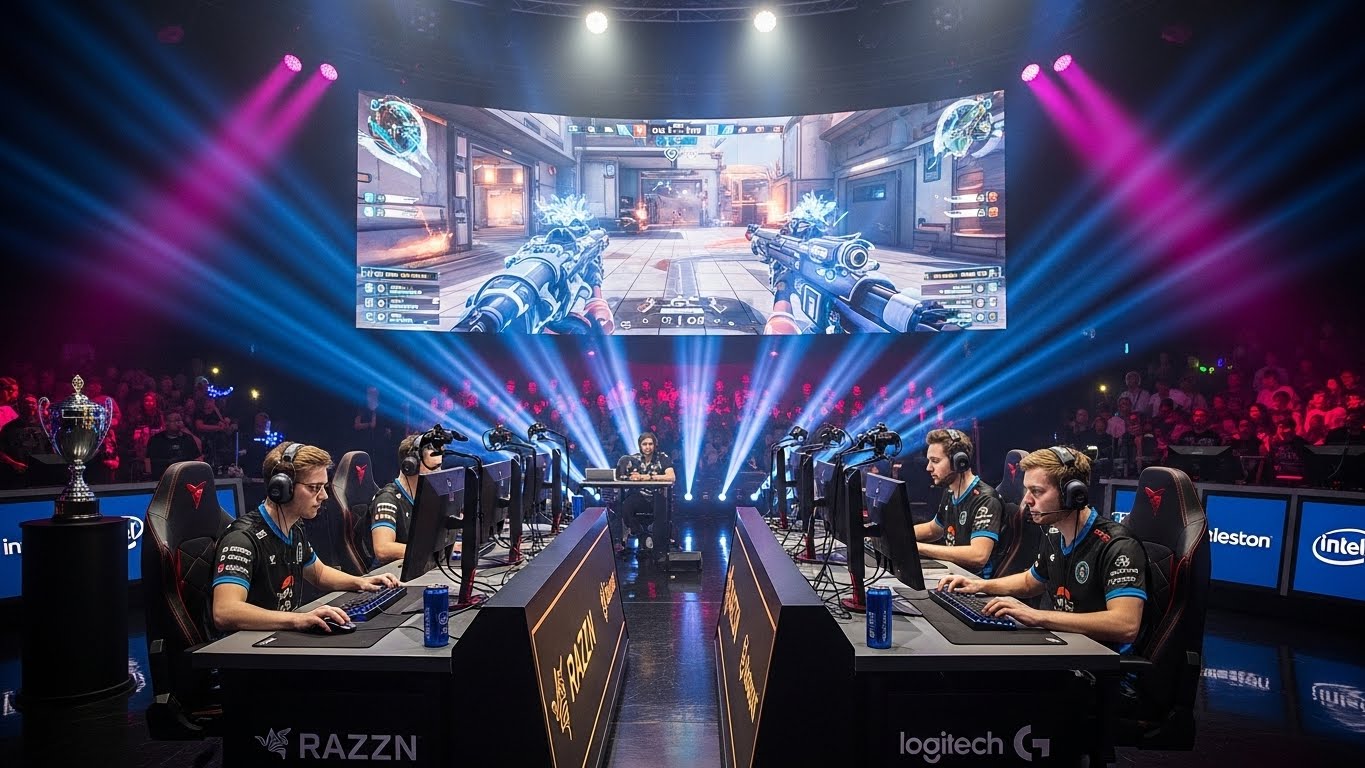
Esports, once a niche hobby for a select group of passionate gamers, has exploded into a global industry worth billions. With the rise of streaming platforms, high-profile tournaments, and an ever-expanding fanbase, competitive gaming has now secured its place in mainstream culture. But how did we get here? In this blog post, we will explore the evolution of esports, its current state, and what the future might hold for this fast-growing sector.
The Birth of Competitive Gaming
The origins of esports can be traced back to the late 20th century when personal computers and gaming consoles began to make their way into homes around the world. The first instances of competitive gaming were informal, typically consisting of friends and local communities coming together to play against each other. However, it wasn’t long before organized tournaments began to emerge.
One of the earliest examples of a formal esports event took place in 1972 at Stanford University. The event, called the “Intergalactic Spacewar Olympics,” revolved around the game Spacewar! and featured a modest prize of a year’s subscription to Rolling Stone magazine. Although the prize was relatively small, this event marked the beginning of what would become a global competitive gaming culture.
As technology advanced throughout the 1980s and 1990s, competitive gaming began to attract more attention. The advent of the internet allowed for online multiplayer experiences, where gamers could challenge one another from anywhere in the world. This shift led to the creation of online tournaments, such as the Red Annihilation Tournament in 1997, which featured the game Quake. The prize for the winner was a Ferrari 328 GTS, a clear sign that competitive gaming was beginning to take on a more serious, professional tone.
The Rise of Major Esports Titles
As the gaming industry evolved, so too did the types of games that were considered suitable for competitive play. By the early 2000s, certain games began to dominate the competitive landscape, and these games became the foundation of esports as we know it today.
One of the first major games to solidify its position in esports history was StarCraft, particularly StarCraft: Brood War. Released in 1998 by Blizzard Entertainment, StarCraft became a global sensation, especially in South Korea, where it became a national pastime. By the early 2000s, professional StarCraft leagues were established, and players could make a career out of competing in tournaments. The game’s widespread appeal was not only due to its engaging strategy and deep gameplay mechanics but also the rise of dedicated esports broadcasting networks like OnGameNet (OGN) and MBCGame.
Another game that played a significant role in the development of modern esports is Counter-Strike. Originally released in 1999 as a mod for Half-Life, Counter-Strike quickly gained a following due to its tactical, team-based gameplay. The first Counter-Strike World Championship was held in 2000, and the game’s competitive scene only grew from there. Over the years, Counter-Strike has evolved into Counter-Strike: Global Offensive (CS:GO), one of the most widely played and watched esports titles in the world today.
The early 2010s saw the introduction of League of Legends (LoL), another title that would become a cornerstone of the esports world. Developed by Riot Games, LoL was released in 2009 and quickly rose to prominence due to its strategic depth, high skill ceiling, and team-oriented gameplay. Riot’s commitment to creating a professional league and regular international tournaments, such as the League of Legends World Championship, helped cement LoL as one of the most popular esports games in the world. By 2018, the prize pool for the World Championship had surpassed $6.4 million, and the event was watched by millions across the globe.
Other games like Dota 2, Overwatch, Fortnite, and Hearthstone also contributed to the growth of esports. These titles not only brought in new players but also attracted huge sponsorships and multi-million-dollar prize pools. With the diversity of games available, there was a niche for nearly every type of gamer, from tactical shooters to real-time strategy games, to battle royale competitions.
The Growth of Esports Infrastructure
As esports gained in popularity, it became clear that a professional ecosystem was necessary to support the players, teams, and tournaments. The infrastructure of esports includes not only the games themselves but also the teams, sponsors, media, and fans that make up the vibrant competitive gaming landscape.
Esports Organizations and Teams
One of the most significant developments in the esports industry has been the creation of professional esports organizations. Teams like Team Liquid, Cloud9, T1, and FaZe Clan are not just groups of players; they have become brands in their own right, complete with sponsorship deals, merchandise, and social media followings. These teams operate much like traditional sports teams, with coaching staff, analysts, and even fitness regimens designed to optimize player performance.
For players, joining an esports organization has become a legitimate career path. Many top players have been able to transition into full-time gaming careers, earning substantial salaries through tournament winnings, sponsorships, and streaming contracts. Some players have even gone on to become social media stars and influencers, further fueling the growth of esports.
Streaming Platforms and Broadcasting
Perhaps the most significant factor contributing to the rise of esports has been the emergence of streaming platforms. Twitch, YouTube Gaming, and Facebook Gaming have provided a space for gamers to broadcast their gameplay to millions of viewers. These platforms have not only allowed players to showcase their skills but have also become the primary medium through which esports tournaments are broadcast.
Twitch, in particular, has played an essential role in the esports boom. Since its launch in 2011, the platform has grown into the largest live-streaming platform for gamers, with millions of viewers watching live streams of competitive games daily. Twitch has become the go-to destination for esports fans, and its partnerships with tournament organizers and players have made it an integral part of the esports ecosystem.
Additionally, traditional sports networks, such as ESPN, have also begun broadcasting esports events, further solidifying the legitimacy of competitive gaming as a mainstream entertainment form.
Sponsorship and Investment
With the increasing viewership and popularity of esports, major companies and investors began to take notice. Sponsorship deals and investments from brands such as Intel, Coca-Cola, Red Bull, and Samsung have become a vital source of revenue for esports organizations and events. These companies have realized that esports offers an avenue to reach a young, tech-savvy audience that is difficult to engage through traditional advertising methods.
In addition to brand sponsorships, venture capital and private equity firms have invested millions of dollars into esports organizations, infrastructure, and technology. These investments have allowed esports to expand rapidly and develop into a sustainable industry with a global reach.
Esports as a Career Path
As esports has continued to grow, it has opened up new career opportunities not just for players, but for content creators, analysts, coaches, and event organizers. The career paths in esports are varied and diverse, ranging from on-camera talent like shoutcasters (the commentators of esports) to behind-the-scenes roles in marketing, production, and management.
Esports has also become a popular career choice for those with a passion for video game design and development. Many esports games have dedicated teams of developers who work continuously to improve gameplay, balance, and user experience. The competitive nature of these games has led to a culture of constant updates and improvements, making the role of game developer an integral part of the esports ecosystem.
Moreover, the rise of esports has spurred the growth of esports journalism, with writers, podcasters, and video creators producing content related to tournaments, players, and game updates. These journalists play an important role in keeping fans informed and engaged in the world of competitive gaming.
The Future of Esports
Looking ahead, the future of esports seems incredibly bright. With technological advancements such as virtual reality (VR) and augmented reality (AR) gaining traction, we may see entirely new forms of competitive gaming emerge. The integration of these technologies could change the way games are played and watched, making esports even more immersive and interactive.
Furthermore, esports is gradually being recognized as a legitimate sport by governments and educational institutions. In 2020, the International Olympic Committee (IOC) began exploring the possibility of including esports in future Olympic Games. This is a clear sign of how far esports has come in terms of recognition and respect.
Additionally, as the industry continues to grow, there is the potential for even more crossover between traditional sports and esports. With athletes from various fields acknowledging esports as a legitimate and skill-based activity, the lines between traditional sports and competitive gaming may continue to blur.
Conclusion
Esports has come a long way since its humble beginnings. From a niche hobby to a global multi-billion-dollar industry, esports has reshaped the way we view gaming, entertainment, and sports. The dedication of players, the support of fans, and the investment of major brands have propelled esports to new heights, creating a sustainable ecosystem that is here to stay.
As technology continues to evolve, esports will likely continue to push boundaries, offering new experiences for players and fans alike. For anyone with an interest in gaming, the future of esports holds endless possibilities. Whether you’re a player, a fan, or an aspiring content creator, the esports world is one where the opportunities are just beginning to unfold.
About the Author