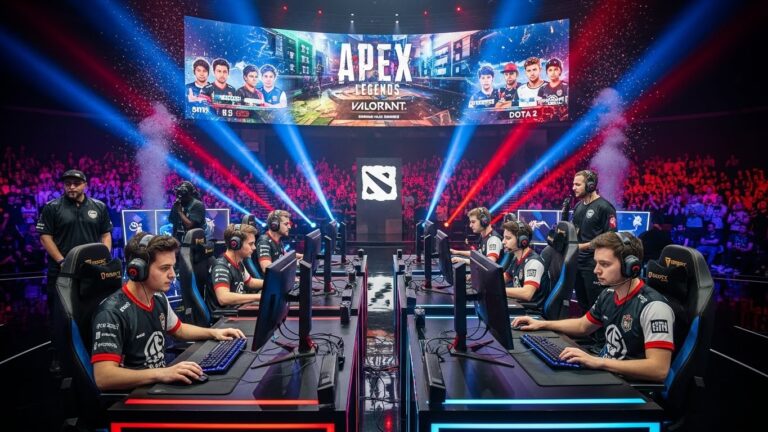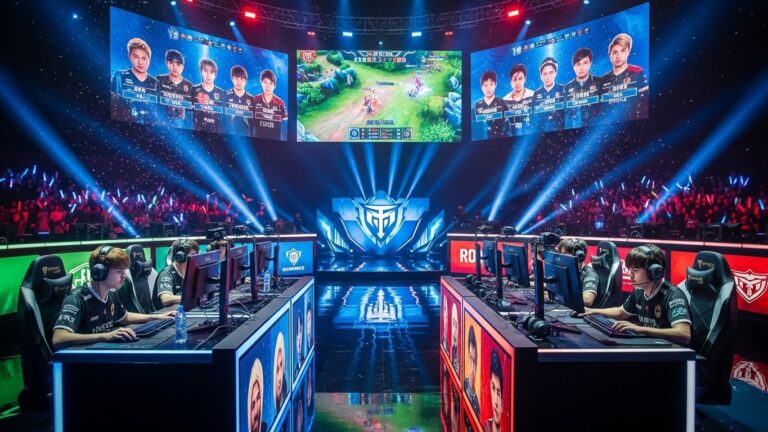

Esports — short for electronic sports — isn’t just a buzzword anymore. It’s an entire world that’s reshaped entertainment, technology, and competition as we know it. What started as small gatherings of gamers in college dorms and computer cafes has exploded into a multibillion-dollar industry with sold-out arenas, corporate sponsors, and players who’ve become international stars.
But how did it happen? What makes Esports so magnetic that millions tune in to watch people play video games? And where is it all heading? Let’s take a journey through the story of Esports — from its humble beginnings to its current place at the center of global culture.
The Humble Beginnings: When Gaming Was Just a Hobby
The story of Esports starts long before Twitch streams, YouTube highlights, or global tournaments. In the 1970s and 1980s, video games were still in their infancy. Arcades filled with flashing lights and the sound of coins dropping became the first arenas for competition. Players gathered around machines like Space Invaders, Pac-Man, and Donkey Kong to set high scores and earn bragging rights.
One of the earliest recorded video game tournaments happened in 1972 at Stanford University, where students competed in a game called Spacewar!. The winner took home a year’s subscription to Rolling Stone magazine — a small prize, but a historic moment. It planted the seed for something much bigger.
As technology advanced through the 1980s, consoles like the Nintendo Entertainment System brought gaming into living rooms, and competitive play found a home in local contests and early televised gaming shows. But true organized Esports as we know them began to form in the 1990s.
The 1990s: The Birth of Competitive Gaming Communities
The 1990s marked a turning point. With the rise of the internet and local area networks (LAN), gamers could connect, compete, and communicate like never before. Titles like Doom, Quake, and StarCraft gave birth to communities obsessed with skill, strategy, and speed.
LAN parties became legendary. Dozens of players would haul their bulky monitors and CPUs to a single space, linking them up for all-night tournaments. What was once a casual pastime started to feel like a real sport — complete with rivalries, practice routines, and a growing sense of professionalism.
South Korea played a major role during this period. By the late 1990s, the country had developed high-speed internet networks and a gaming culture deeply embedded in youth life. The release of StarCraft in 1998 turned into a cultural event, giving rise to professional players, televised matches, and fanbases that rivaled traditional sports teams.
The foundation for modern Esports had been laid. The players weren’t just kids with consoles anymore — they were athletes in their own right.
The 2000s: Esports Enters the Global Stage
By the early 2000s, Esports began to look like the global industry we know today. Professional leagues, international tournaments, and corporate sponsorships started to take shape. Organizations such as the Cyberathlete Professional League (CPL) and Major League Gaming (MLG) were founded, creating structured competitions and prize pools that attracted serious talent.
Games like Counter-Strike, Warcraft III, and Halo 2 became pillars of the scene. Teams began to form, coaches started to appear, and player contracts became the norm. Suddenly, gamers had careers — and audiences.
South Korea remained a powerhouse, with its dedicated TV channels broadcasting StarCraft matches to millions. But other regions were catching up. Europe, North America, and China began developing their own leagues and producing players who could stand toe-to-toe with the best.
The rise of broadband internet helped too. Players could now compete globally without needing to be in the same room. Online tournaments became common, and with streaming technology starting to emerge, fans could finally watch their favorite players live from anywhere in the world.
The Streaming Revolution: When Everyone Could Watch
If one innovation truly propelled Esports into the mainstream, it was streaming. Platforms like Twitch and YouTube Gaming revolutionized how people consumed games. Suddenly, anyone could broadcast their gameplay, share their reactions, and build audiences of millions.
Esports tournaments that once drew small crowds in person could now reach tens of millions online. Viewership exploded. By the mid-2010s, tournaments like League of Legends Worlds, The International (for Dota 2), and CS:GO Majors were pulling in numbers comparable to major sports events.
Streaming also changed how players interacted with fans. Instead of being distant figures, professional gamers became relatable personalities. Fans could chat with them, learn their strategies, and even support them financially through donations and subscriptions. This direct connection built communities that traditional sports could only dream of replicating.
The Business of Esports: From Passion to Profit
As audiences grew, so did the money. Brands saw an opportunity to reach a younger, tech-savvy audience that traditional advertising often missed. Sponsorships from energy drink companies, tech brands, and apparel firms flooded in. Esports became a serious business — with investors, franchised teams, and dedicated arenas.
Prize pools skyrocketed. Dota 2’s “The International” set records year after year, with winnings that surpassed even some traditional sporting events. In 2019, the tournament offered a prize pool of over $34 million, with the winning team taking home nearly half.
Franchising models — like those used in the Overwatch League and Call of Duty League — mirrored the structure of sports leagues, complete with city-based teams, seasonal play, and structured salaries. It signaled that Esports wasn’t just entertainment anymore; it was an industry capable of standing beside football, basketball, or baseball.
The Players: New-Age Athletes
The perception of gamers has changed dramatically. Once seen as hobbyists, professional Esports players now train, diet, and strategize like athletes in any other field. Teams hire nutritionists, physical therapists, and psychologists to keep players at their peak performance.
The life of a pro gamer isn’t easy. Reflexes must be razor-sharp, focus must be unbroken, and teamwork is everything. Most players retire in their mid-20s, as the mental and physical strain of high-speed competition catches up.
Still, the passion is unmatched. Players practice for hours daily, review footage, and develop playbooks as detailed as any sports team. They’re masters of precision, decision-making, and adaptability — skills that define champions in any arena.
The Fans: The Heartbeat of the Esports World
No Esports scene could thrive without its fans. From online communities to massive live events, the energy that fans bring is what truly transforms gaming into sport.
Step into an Esports arena during a championship and you’ll feel it — the chants, the banners, the sea of jerseys representing favorite teams. The crowd roars with every clutch play or near miss, just like any football stadium. The emotion is raw, real, and contagious.
Fans also drive the online ecosystem. They create content, share memes, produce highlight reels, and keep the culture alive between events. Social media platforms buzz with analysis, predictions, and debates that echo traditional sports talk shows. It’s proof that Esports isn’t just about the games — it’s about belonging to something bigger.
The Games That Defined Esports
Every generation of Esports has its defining titles — the games that shaped communities and set new standards for competitive play.
StarCraft was one of the first to dominate global competition, especially in Asia. Counter-Strike became the gold standard for tactical shooters, with its balance of skill and teamwork. League of Legends brought strategy and fantasy to the mainstream, creating one of the most passionate fanbases in gaming. Dota 2 pushed the boundaries of scale and complexity, while Fortnite introduced battle royale gameplay to a new audience.
Other titles, from Valorant to Rocket League, continue to expand the Esports landscape. Each brings its own flavor — different mechanics, pacing, and strategies — yet they all share one thing: they reward mastery, discipline, and creativity.
Esports and Traditional Sports: A Convergence in Motion
For a long time, traditional sports organizations viewed gaming as an outsider. That’s no longer the case. Today, major sports clubs invest heavily in Esports teams or collaborate with gaming brands. Football clubs have FIFA teams, the NBA has the 2K League, and Formula 1 has its own Esports championship.
The overlap isn’t just financial — it’s cultural. Both worlds value competition, teamwork, and storytelling. Esports athletes may not sweat on the field, but they face pressure, strategy, and fan expectations just the same.
The pandemic years further accelerated this convergence. As live sports halted, Esports filled the void, keeping fans entertained with virtual competitions and simulated races. Suddenly, even those who’d never watched gaming before began tuning in.
The Global Impact: Culture, Careers, and Opportunities
Esports has done more than entertain — it’s created careers, communities, and cultures. Beyond the players and teams, there are coaches, analysts, casters, event organizers, designers, and marketers all working behind the scenes.
Universities now offer Esports scholarships, and educational programs teach the business and technology behind the scenes. Cities host tournaments to boost tourism, while streaming platforms employ thousands to support content creation.
The cultural reach of Esports is undeniable. Its influence can be seen in music, fashion, and even film. Iconic moments from tournaments become viral memes, and Esports stars appear on magazine covers and brand campaigns. The line between gaming and mainstream entertainment is now almost invisible.
Challenges and Growing Pains
For all its success, Esports isn’t without challenges. Issues like player burnout, unstable team finances, and inconsistent league management continue to surface. The lack of standardized regulation across countries can make it difficult for players and teams to operate smoothly.
Cheating, match-fixing, and toxic behavior also pose threats. While organizations have worked hard to maintain integrity and fair play, the digital nature of Esports means these issues can never be ignored.
Inclusivity remains another major topic. Although the scene is global, it has often struggled to represent women and marginalized groups fairly. However, progress is being made — with more diverse tournaments, female-led organizations, and inclusive policies taking shape worldwide.
The Role of Technology: The Backbone of Esports
Technology has always been the driving force behind Esports. From faster processors to better graphics, every advancement enhances the experience for both players and viewers.
High-refresh monitors, mechanical keyboards, and precision mice have become standard equipment. Cloud gaming and high-speed internet are making global play smoother than ever. Artificial intelligence now aids in training and analytics, helping teams study patterns and refine strategies.
Virtual reality (VR) and augmented reality (AR) are also starting to enter the picture, hinting at what future Esports could look like — fully immersive, interactive experiences where players and spectators blend in one digital space.
Esports as a Social Connector
Beyond the competition, Esports has proven to be a powerful social bridge. It connects people across cultures, languages, and continents. Friendships and communities form not through physical proximity but through shared passion.
For younger generations, gaming isn’t just recreation — it’s communication. Players hang out in game lobbies, chat on Discord, and watch matches together, creating digital spaces that feel as real as any physical gathering. In many ways, Esports has become the new community hall of the internet age.
The Future of Esports: What Lies Ahead
Looking forward, Esports shows no signs of slowing down. Industry projections continue to point upward, with viewership, sponsorship, and revenue all on steady climbs. Emerging regions in Africa, the Middle East, and Latin America are joining the global stage, adding new talent and diversity to the mix.
Mobile gaming is set to push the next wave of growth. Titles like PUBG Mobile, Free Fire, and Mobile Legends have already proven that competitive gaming doesn’t require expensive equipment — just a phone and skill.
The line between Esports, streaming, and entertainment will likely blur further. Expect hybrid events, interactive broadcasts, and virtual arenas where fans participate, not just watch. The technology is catching up to imagination, and that makes the future thrillingly unpredictable.
Why Esports Matters
At its core, Esports represents something deeply human — the desire to compete, to improve, and to connect. It’s proof that passion, skill, and community can create something global without borders or language barriers.
For millions, Esports isn’t just about watching games. It’s about identity, creativity, and belonging. It’s about being part of a movement that redefines what sport, media, and entertainment mean in the digital era.
Conclusion: From Pixels to Prestige
Esports has come a long way from the smoky arcades of the 1970s. What started as a small hobby has grown into a cultural and economic powerhouse — one that continues to evolve faster than anyone could have imagined.
It’s more than a competition. It’s a living ecosystem where players chase perfection, fans celebrate community, and technology pushes the limits of what’s possible. The energy, creativity, and inclusiveness of Esports prove that the future of sport isn’t just physical — it’s digital, diverse, and open to everyone.
And as the next generation picks up their controllers, keyboards, and headsets, one thing’s for sure: the story of Esports is still being written, and its best chapters are yet to come.
About the Author